Recuvera
Recuvera
A Virtual Health Monitoring Platform for Doctors & Health Professionals
Project Type: Web Application Design (End-to-end Product Design)
My Role: UI design, User research, User Stories, User Flow, Information Architecture, Wireframes(lo-fi &hifi) Visual Design.
A Virtual Health Monitoring Platform for Doctors & Health Professionals
Project Type: Web Application Design (End-to-end Product Design)
My Role: UI design, User research, User Stories, User Flow, Information Architecture, Wireframes(lo-fi &hifi) Visual Design.
A Virtual Health Monitoring Platform for Doctors & Health Professionals
Project Type: Web Application Design (End-to-end Product Design)
Role: UI design, User research, User Stories, User Flow, Information Architecture, Wireframes(lo-fi &hifi) Visual Design.
HealthTech SAAS
HealthTech SAAS
HealthTech SAAS
UI/UX web Design
UI/UX web Design
UI/UX web Design
2025
2025
2025
Overview
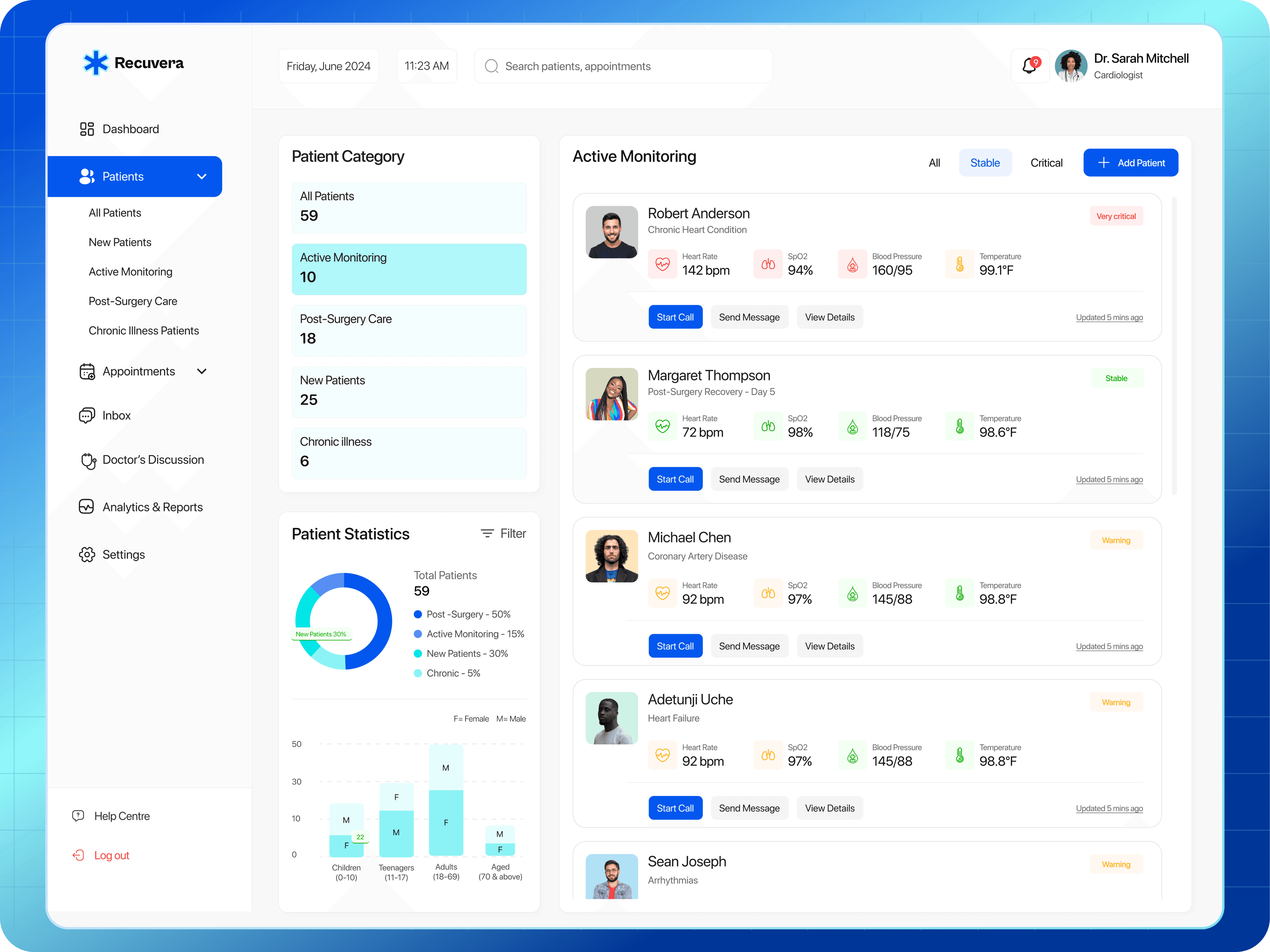
Recuvera is a web-based SaaS application designed to help healthcare providers remotely monitor and engage with post-operative and chronically ill patients. With vital features such as daily health logs, secure messaging, symptom tracking, scheduling, and video consultations, healthcare providers can make better clinical decision and improve patient outcomes.
Core Challenge
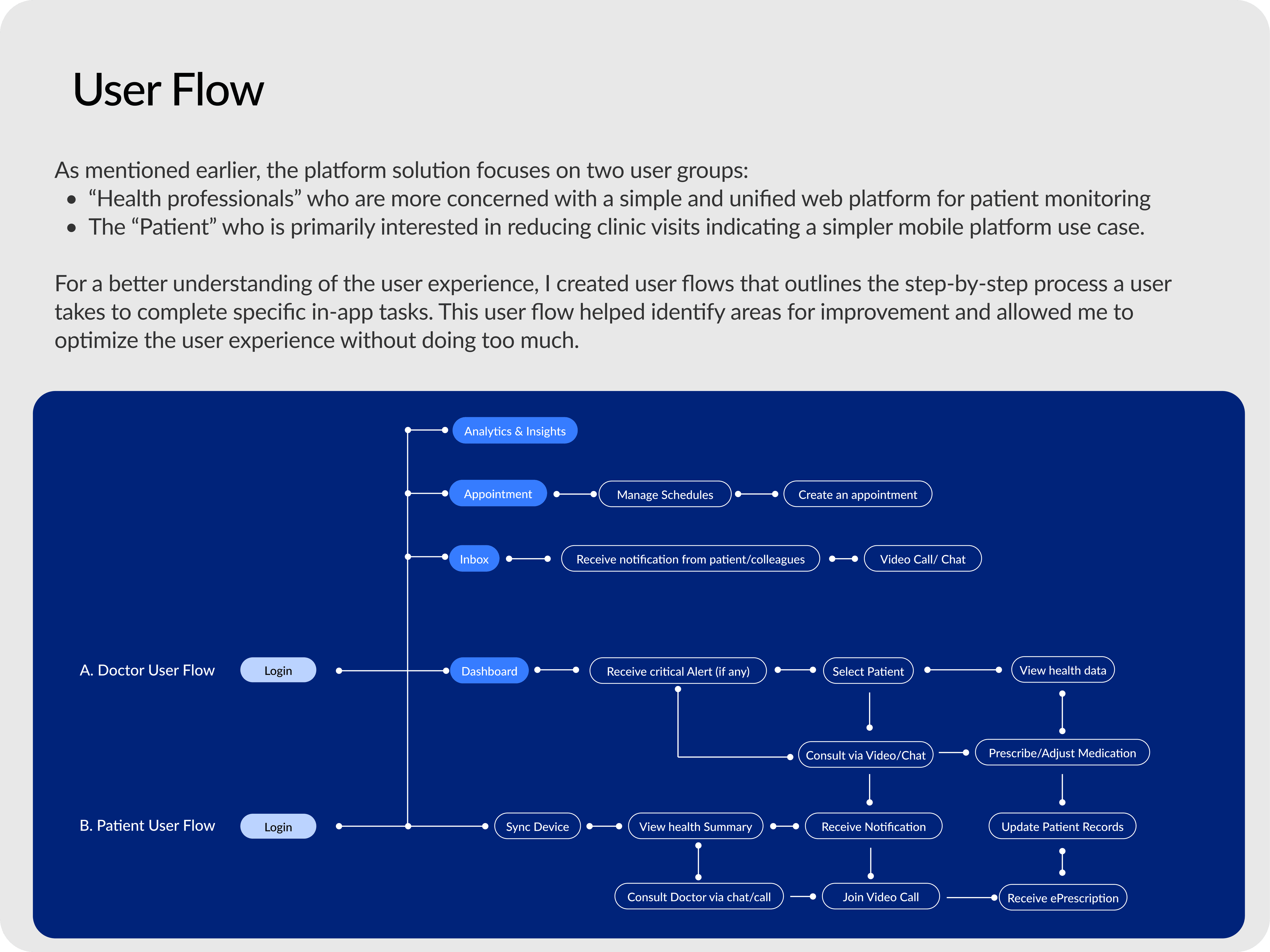
Doctors need a simple, centralized way to monitor patients remotely, especially those recovering from surgery or managing chronic illnesses, without relying on scattered tools (email, calls, spreadsheets).
Patients often feel disconnected from care between appointments, risking poor outcomes and costly readmissions.
Business & Product Goals
Drive SaaS adoption by clinics seeking remote care tools post-COVID
Reduce hospital readmissions by enabling continuous care
Improve care team efficiency with all-in-one platform
Boost patient satisfaction & retention via personalized support
Overview
Recuvera is a web-based SaaS application designed to help healthcare providers remotely monitor and engage with post-operative and chronically ill patients. With vital features such as daily health logs, secure messaging, symptom tracking, scheduling, and video consultations, healthcare providers can make better clinical decision and improve patient outcomes.
Core Challenge
Doctors need a simple, centralized way to monitor patients remotely, especially those recovering from surgery or managing chronic illnesses, without relying on scattered tools (email, calls, spreadsheets).
Patients often feel disconnected from care between appointments, risking poor outcomes and costly readmissions.
Business & Product Goals
Drive SaaS adoption by clinics seeking remote care tools post-COVID
Reduce hospital readmissions by enabling continuous care
Improve care team efficiency with all-in-one platform
Boost patient satisfaction & retention via personalized support
Overview
Recuvera is a web-based SaaS application designed to help healthcare providers remotely monitor and engage with post-operative and chronically ill patients. With vital features such as daily health logs, secure messaging, symptom tracking, scheduling, and video consultations, healthcare providers can make better clinical decision and improve patient outcomes.
Core Challenge
Doctors need a simple, centralized way to monitor patients remotely, especially those recovering from surgery or managing chronic illnesses, without relying on scattered tools (email, calls, spreadsheets).
Patients often feel disconnected from care between appointments, risking poor outcomes and costly readmissions.
Business & Product Goals
Drive SaaS adoption by clinics seeking remote care tools post-COVID
Reduce hospital readmissions by enabling continuous care
Improve care team efficiency with all-in-one platform
Boost patient satisfaction & retention via personalized support
HI-FI Design
HI-FI Design
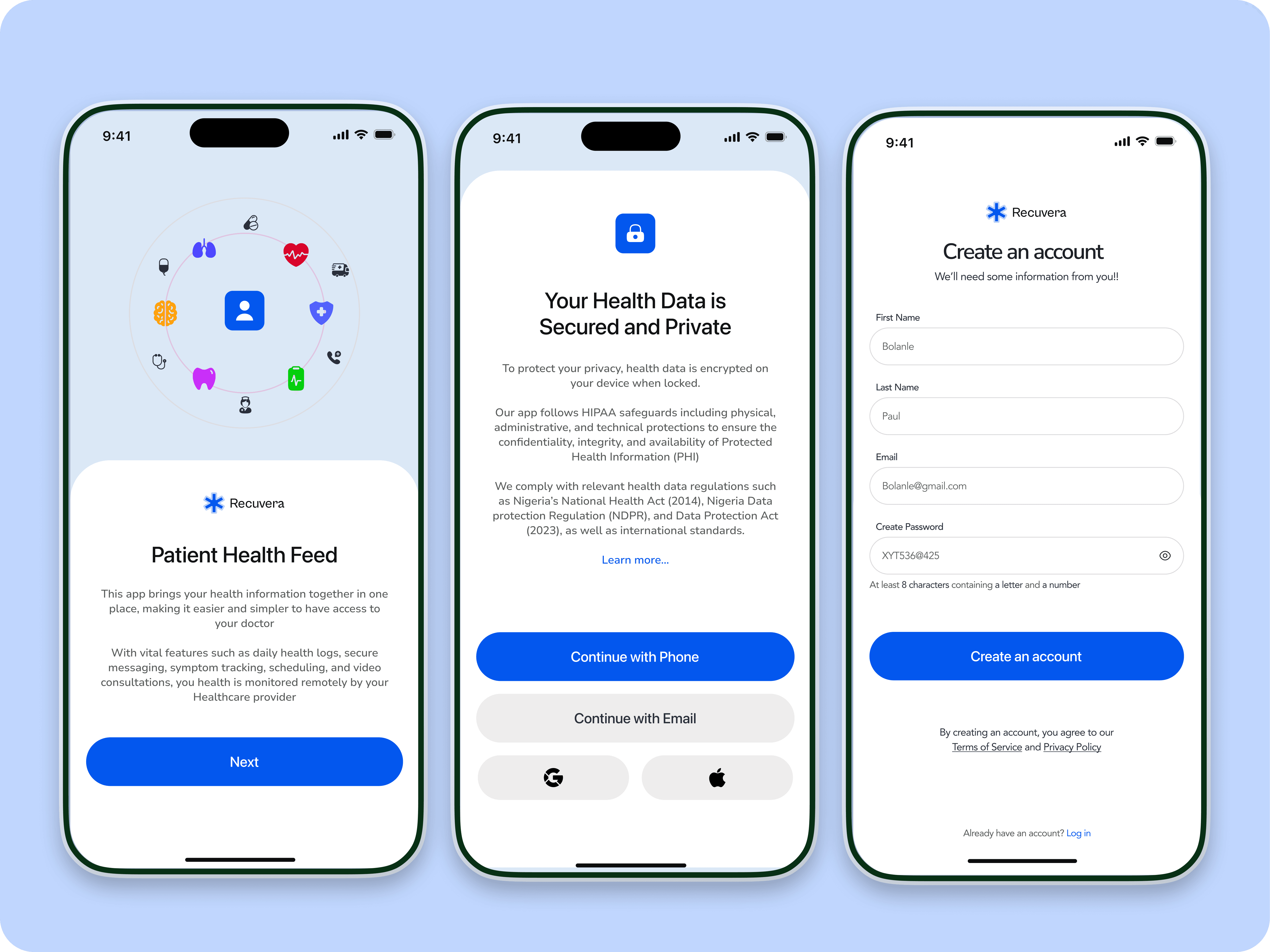
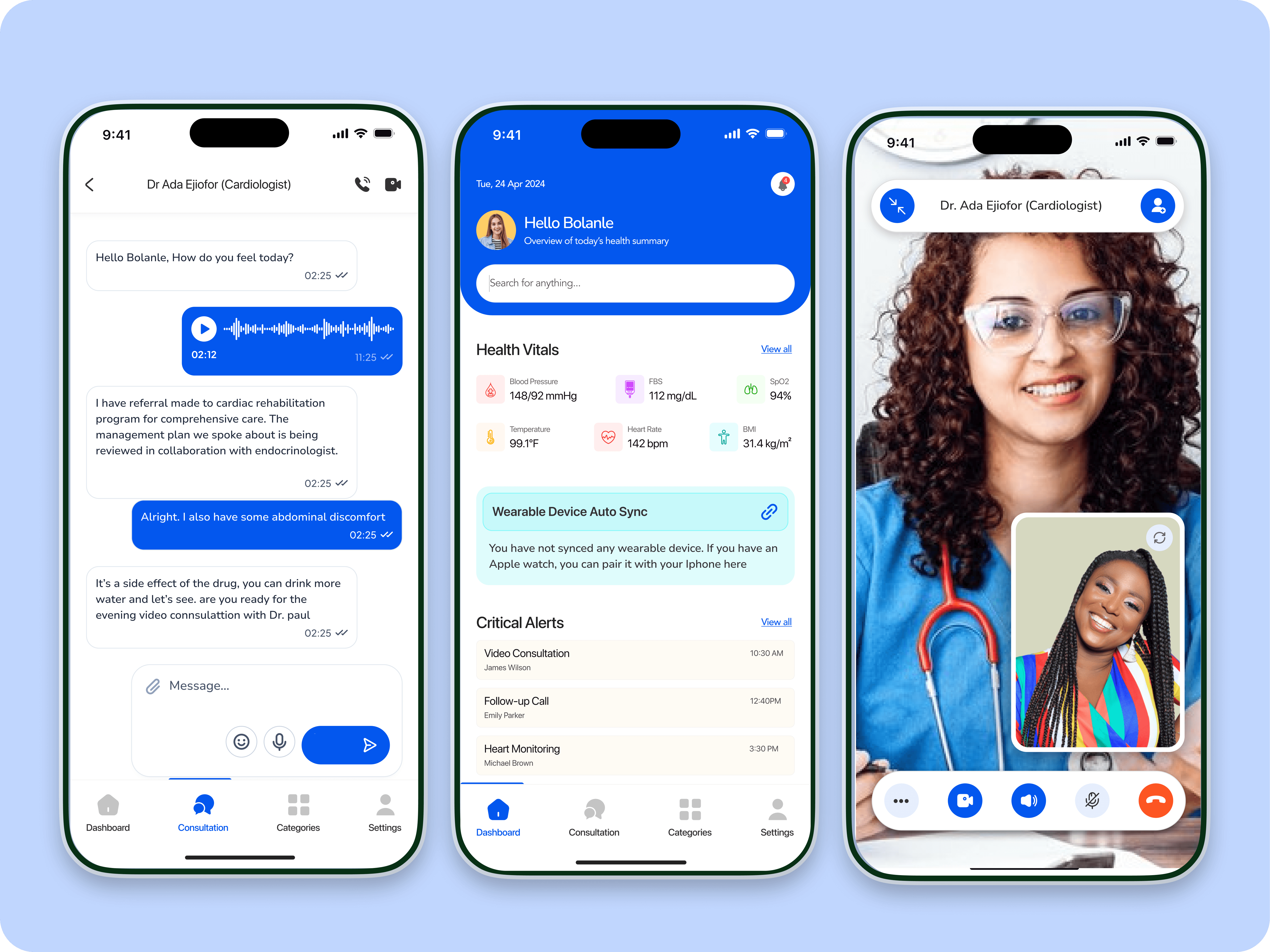
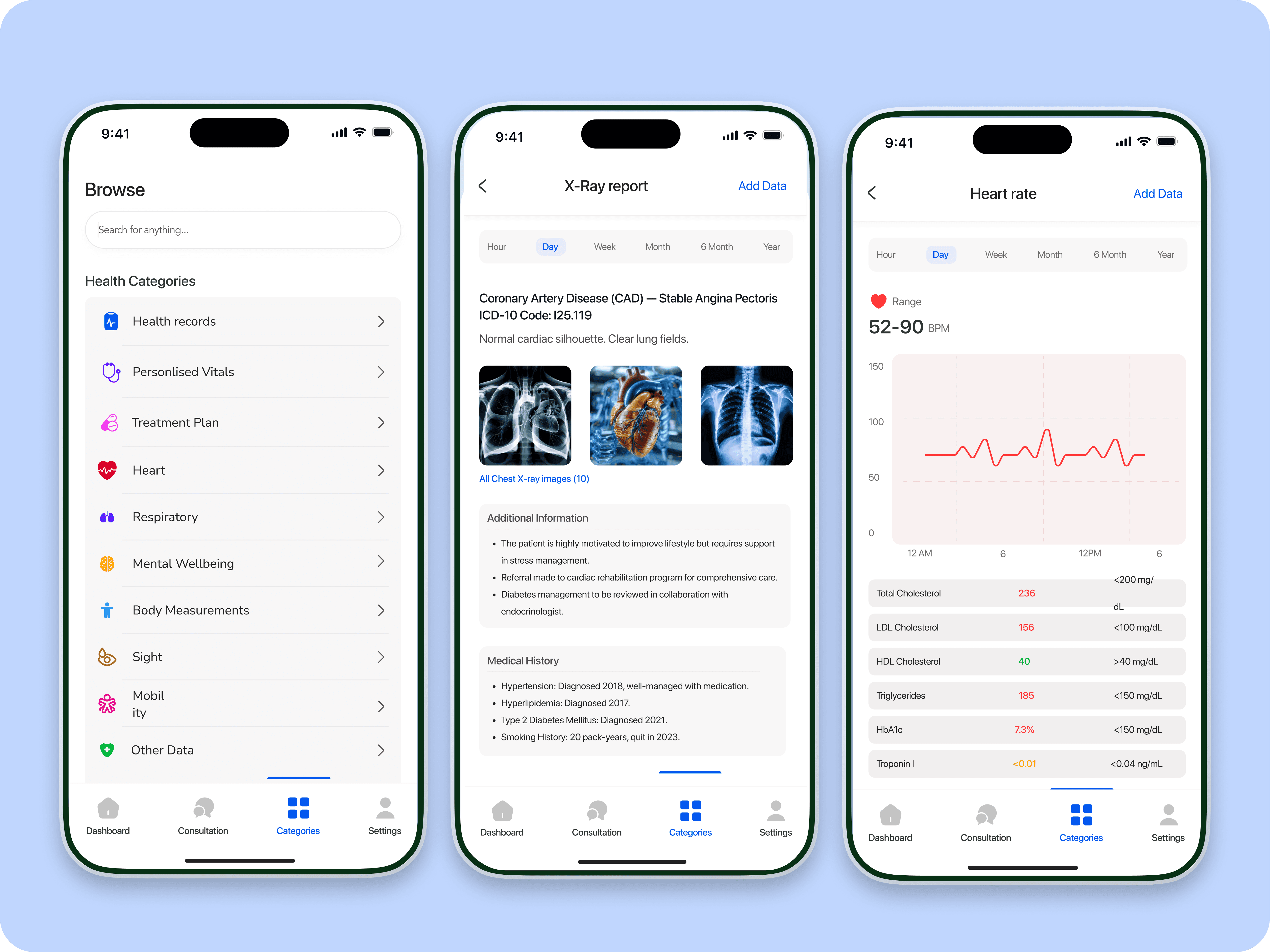
Mobile Screens For Patient
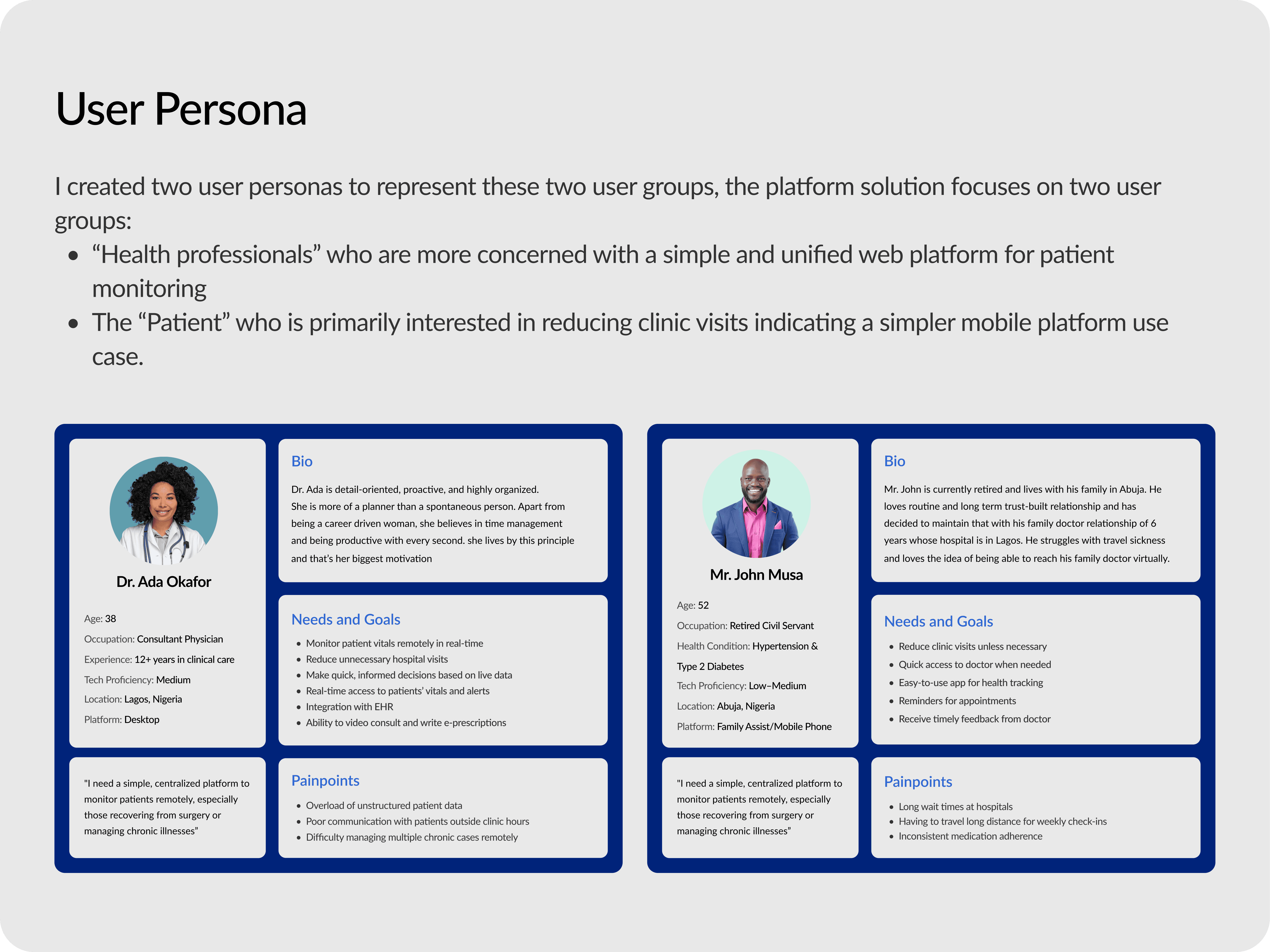
The second persona represent the “Patient” who is primarily interested in reducing clinic visits indicating a simpler mobile platform use case. This enables them connect/sync with their healthcare provider
Mobile Screens For Patient
The second persona represent the “Patient” who is primarily interested in reducing clinic visits indicating a simpler mobile platform use case. This enables them connect/sync with their healthcare provider
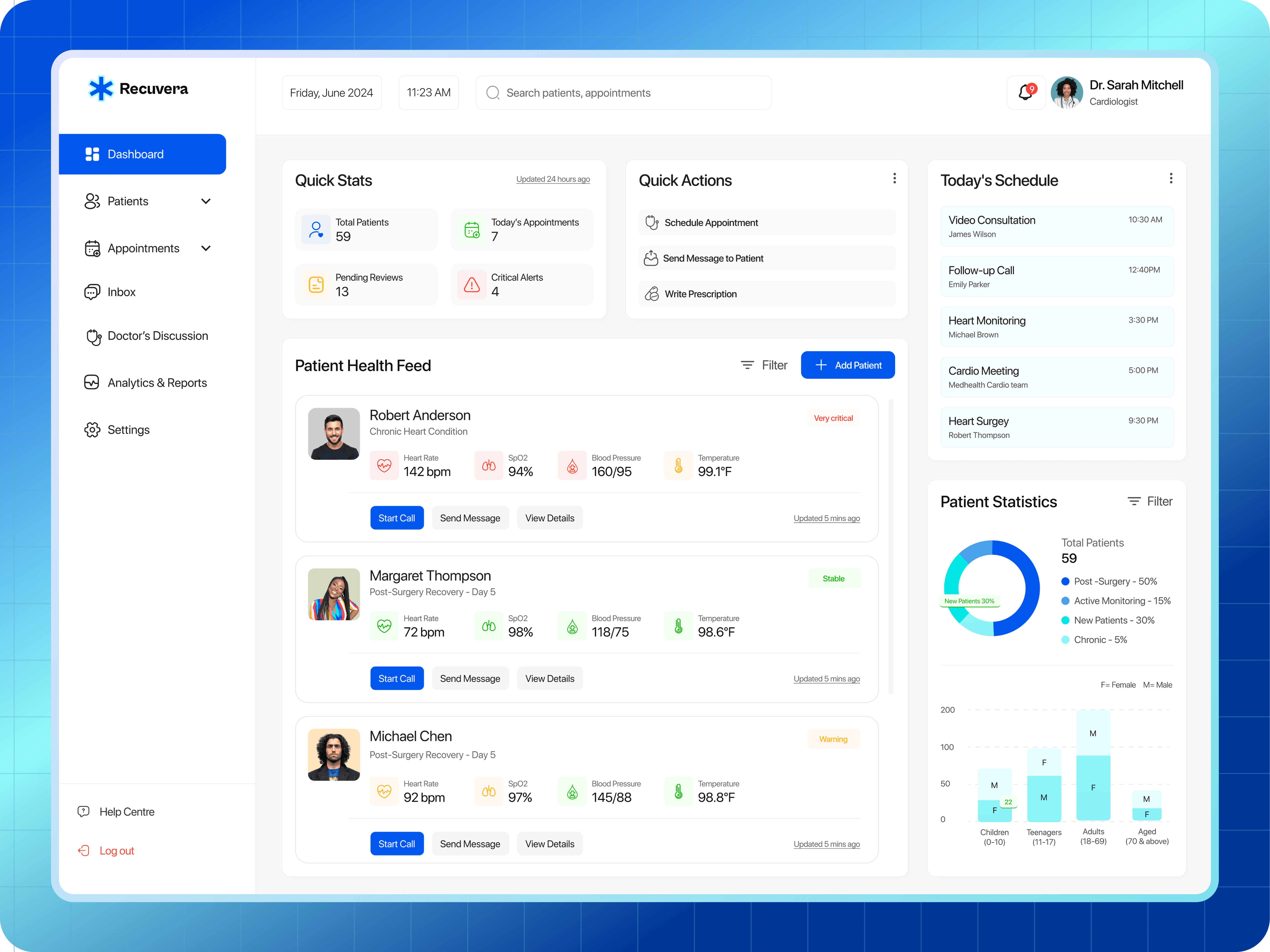
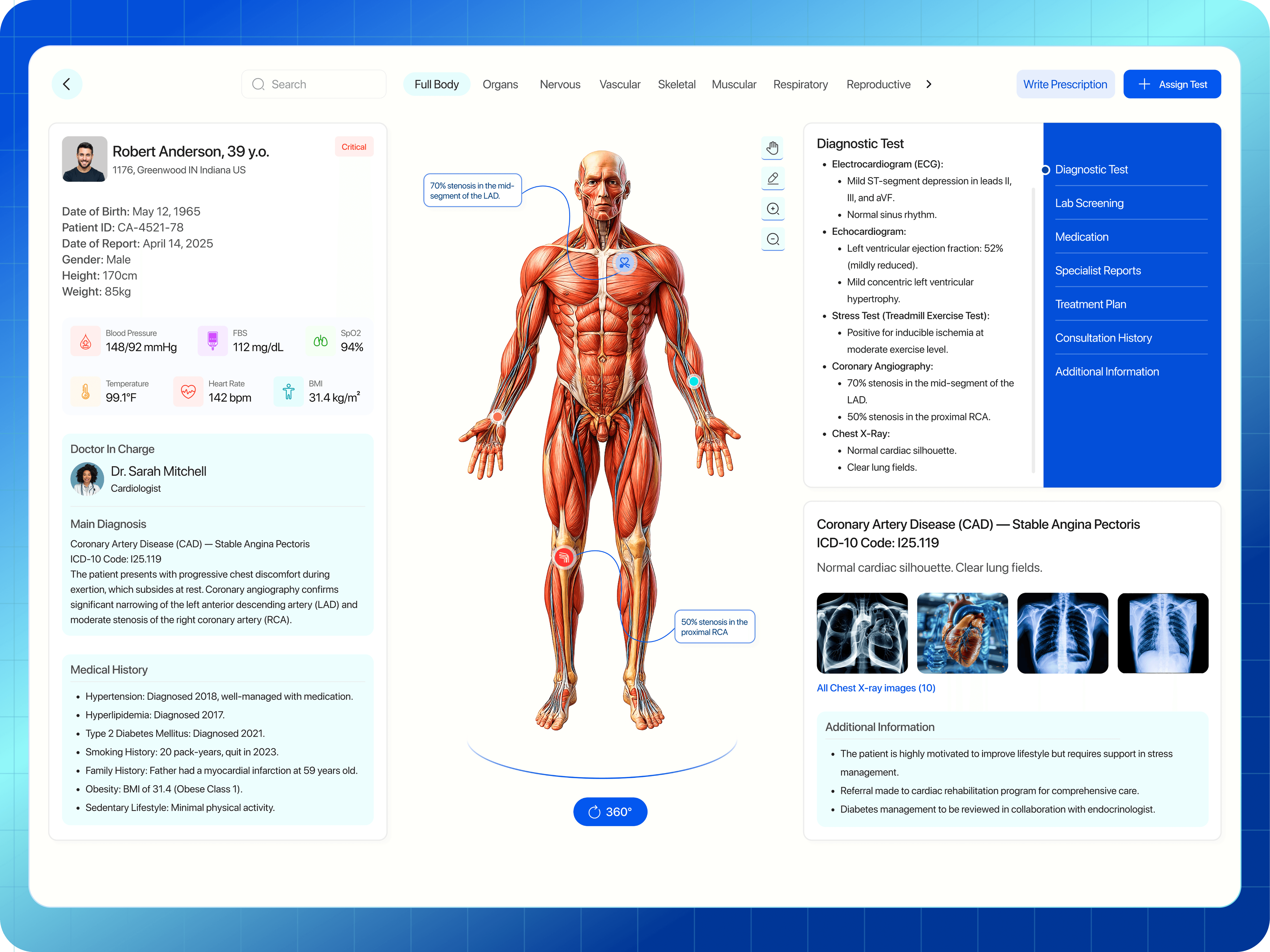
Patient Overview
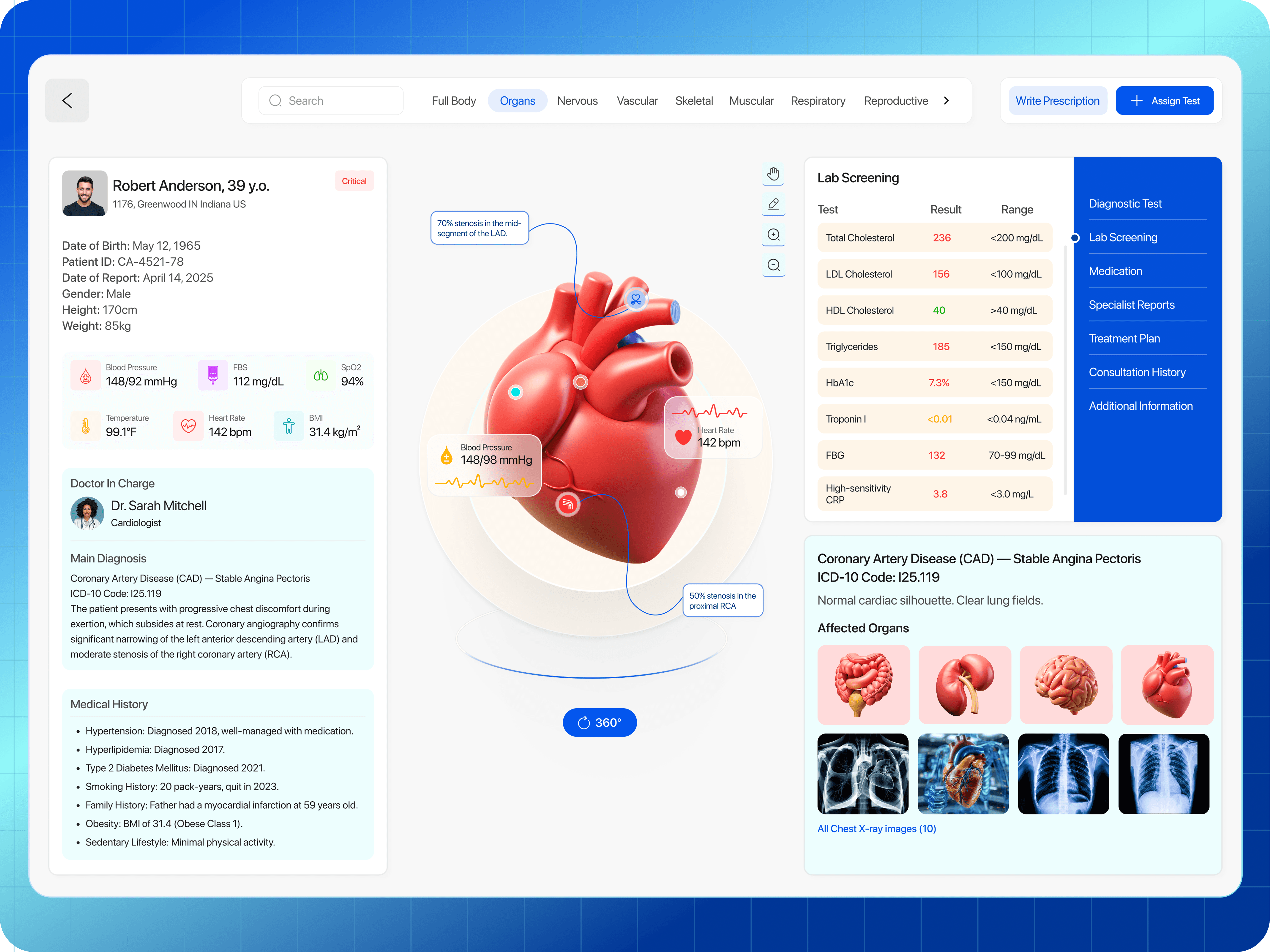
A detailed patient profile showing conditions, medications, appointment history, notes, and recovery progress.
User Need Solved: Doctors needed a 360° view of each patient to give contextual care.
Design Decision:Tabbed layout with collapsible sections and search bar for faster access.
Outcome: Reduces clinical errors, boosts patient satisfaction, and increases platform stickiness through personalized care delivery.
Patient Overview
A detailed patient profile showing conditions, medications, appointment history, notes, and recovery progress.
User Need Solved: Doctors needed a 360° view of each patient to give contextual care.
Design Decision:Tabbed layout with collapsible sections and search bar for faster access.
Outcome: Reduces clinical errors, boosts patient satisfaction, and increases platform stickiness through personalized care delivery.
Patient Overview
A detailed patient profile showing conditions, medications, appointment history, notes, and recovery progress.
User Need Solved: Doctors needed a 360° view of each patient to give contextual care.
Design Decision:Tabbed layout with collapsible sections and search bar for faster access.
Outcome: Reduces clinical errors, boosts patient satisfaction, and increases platform stickiness through personalized care delivery.

Appointments & Scheduling
Appointments & Scheduling
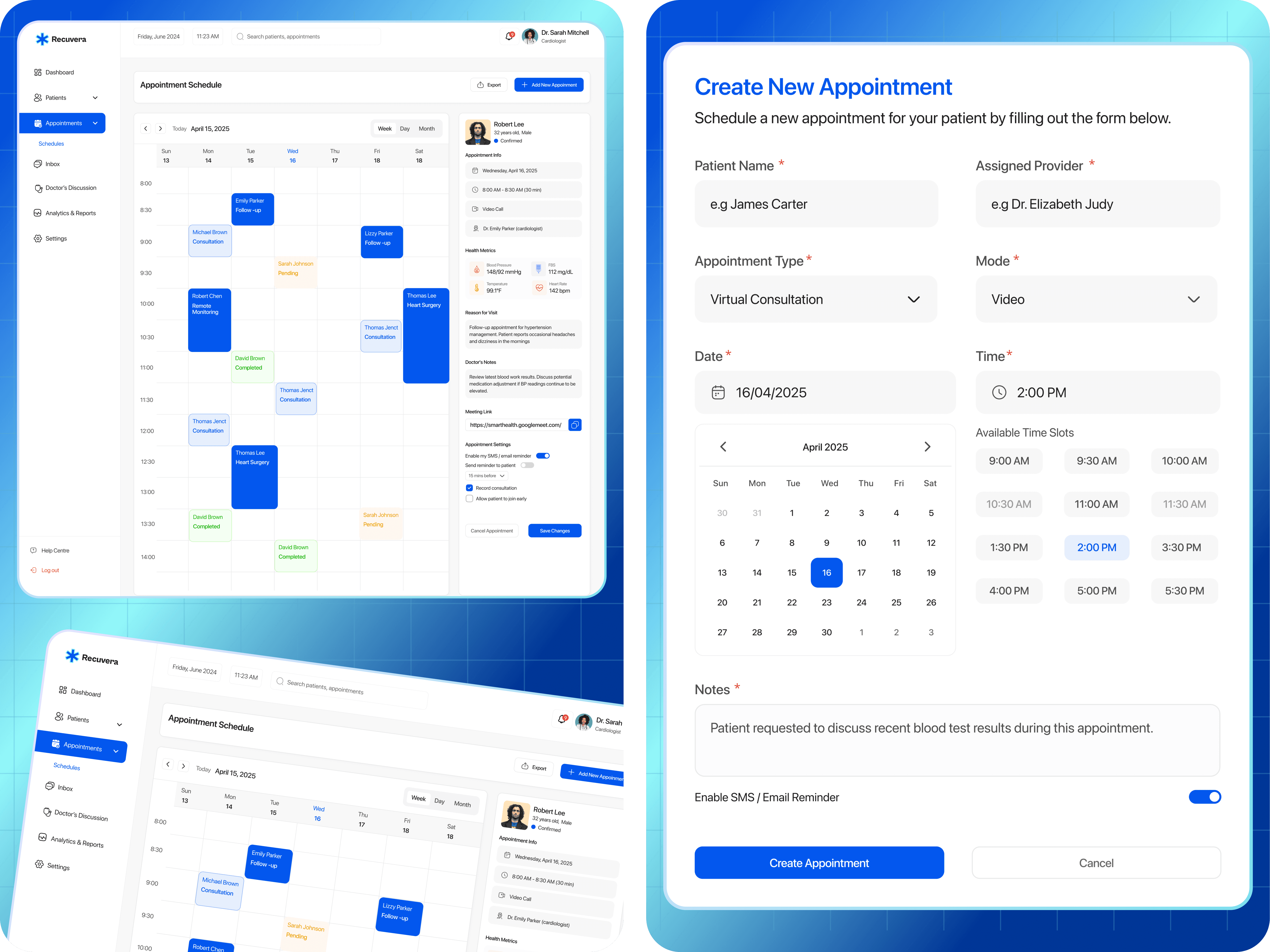
A calendar-integrated scheduling system with smart suggestions based on availability, urgency, and patient timezone.
User Need Solved: Healthcare providers struggled with back-and-forths, no-shows, and coordinating multiple patient appointments.
Design Decision: One-tap rescheduling, calendar sync, automated reminders, and waitlist features.
Outcome: Reduces appointment gaps and no-shows, boosting clinic utilization and revenue while improving patient trust.
A calendar-integrated scheduling system with smart suggestions based on availability, urgency, and patient timezone.
User Need Solved: Healthcare providers struggled with back-and-forths, no-shows, and coordinating multiple patient appointments.
Design Decision: One-tap rescheduling, calendar sync, automated reminders, and waitlist features.
Outcome: Reduces appointment gaps and no-shows, boosting clinic utilization and revenue while improving patient trust.
Analytics & Insights
Analytics & Insights
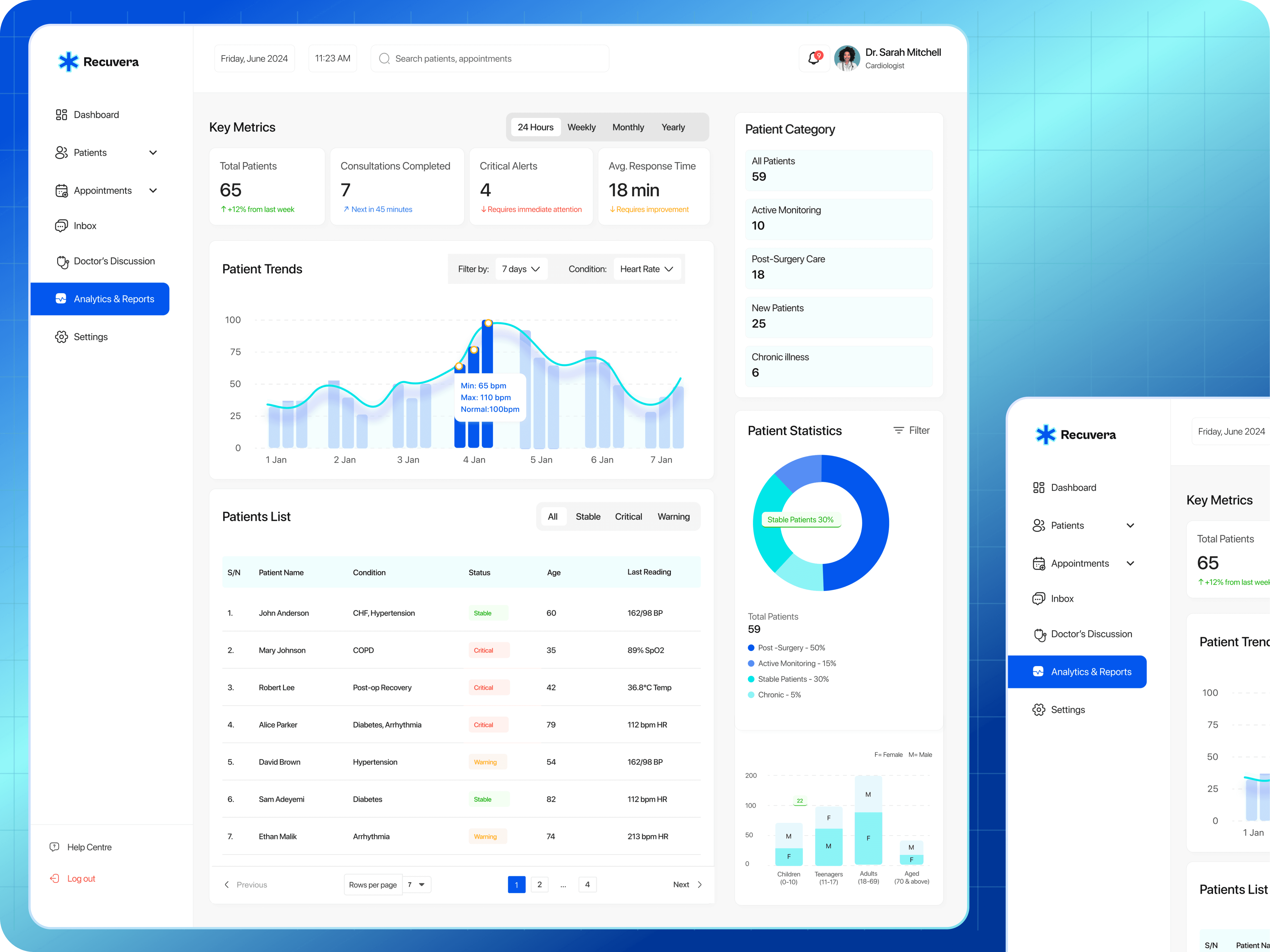
An analytics dashboard visualizing trends in patient vitals, symptom progression, medication adherence, and outcomes.
User Need Solved: Providers wanted to measure patient progress over time and identify high-risk cases early.
Design Decision: Built visual trend lines, health score summaries, and alerts for abnormal patterns.
Outcome: Enables data-driven decisions, supports reporting requirements, and positions the platform as a clinical-quality tool.
An analytics dashboard visualizing trends in patient vitals, symptom progression, medication adherence, and outcomes.
User Need Solved: Providers wanted to measure patient progress over time and identify high-risk cases early.
Design Decision: Built visual trend lines, health score summaries, and alerts for abnormal patterns.
Outcome: Enables data-driven decisions, supports reporting requirements, and positions the platform as a clinical-quality tool.
Secure Messaging
Secure Messaging
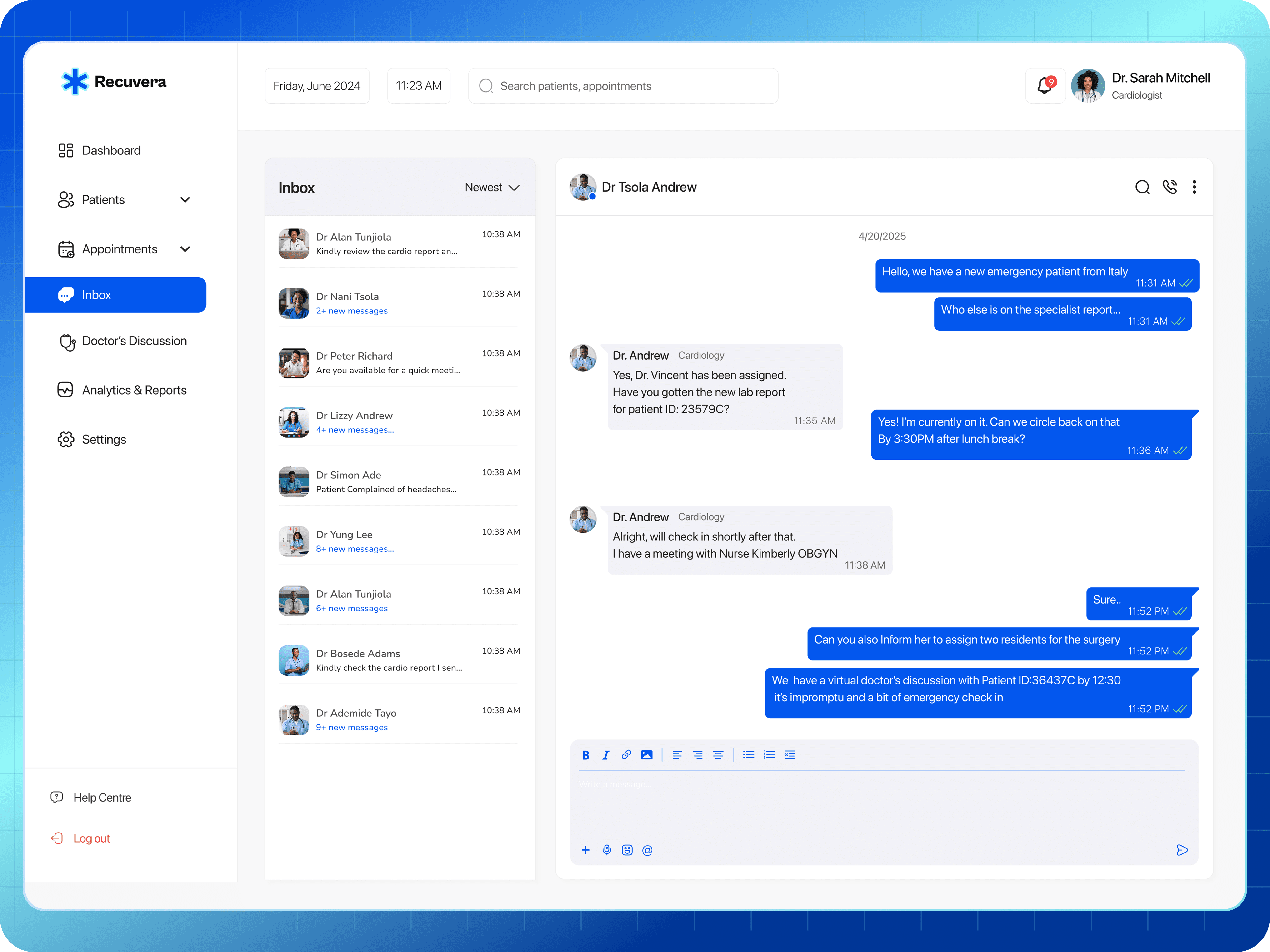
A HIPAA-compliant, real-time chat system between doctors and patients with attachment support.
User Need Solved: Providers were frustrated by disjointed communication or having to rely on different outside application tools like email or WhatsApp.
Design Decision: Minimalist chat UI with quick replies, inline file sharing, and system-wide notifications.
Outcome: Keeps communication within the platform = higher engagement, better data security, and increased subscription value.
A HIPAA-compliant, real-time chat system between doctors and patients with attachment support.
User Need Solved: Providers were frustrated by disjointed communication or having to rely on different outside application tools like email or WhatsApp.
Design Decision: Minimalist chat UI with quick replies, inline file sharing, and system-wide notifications.
Outcome: Keeps communication within the platform = higher engagement, better data security, and increased subscription value.
Did We Solve the Problem?
Did We Solve the Problem?
Feedback indicates that we have successfully streamlined patient health data management, leading to a reduction in hospital readmissions and clinical visits—a process that is still ongoing. The Recuvera project has reached significant milestones after several weeks of initial testing and has seen strong adoption within the healthcare sector. Notably, 65% of users provided positive feedback, praising platform’s simplicity and effectiveness.
With additional investment, we aim to accelerate development, expand our reach, and solidify Recuvera’s position as a transformative solution in digital healthcare.
Feedback indicates that we have successfully streamlined patient health data management, leading to a reduction in hospital readmissions and clinical visits—a process that is still ongoing. The Recuvera project has reached significant milestones after several weeks of initial testing and has seen strong adoption within the healthcare sector. Notably, 65% of users provided positive feedback, praising platform’s simplicity and effectiveness.
With additional investment, we aim to accelerate development, expand our reach, and solidify Recuvera’s position as a transformative solution in digital healthcare.
Conclusion
What I learned
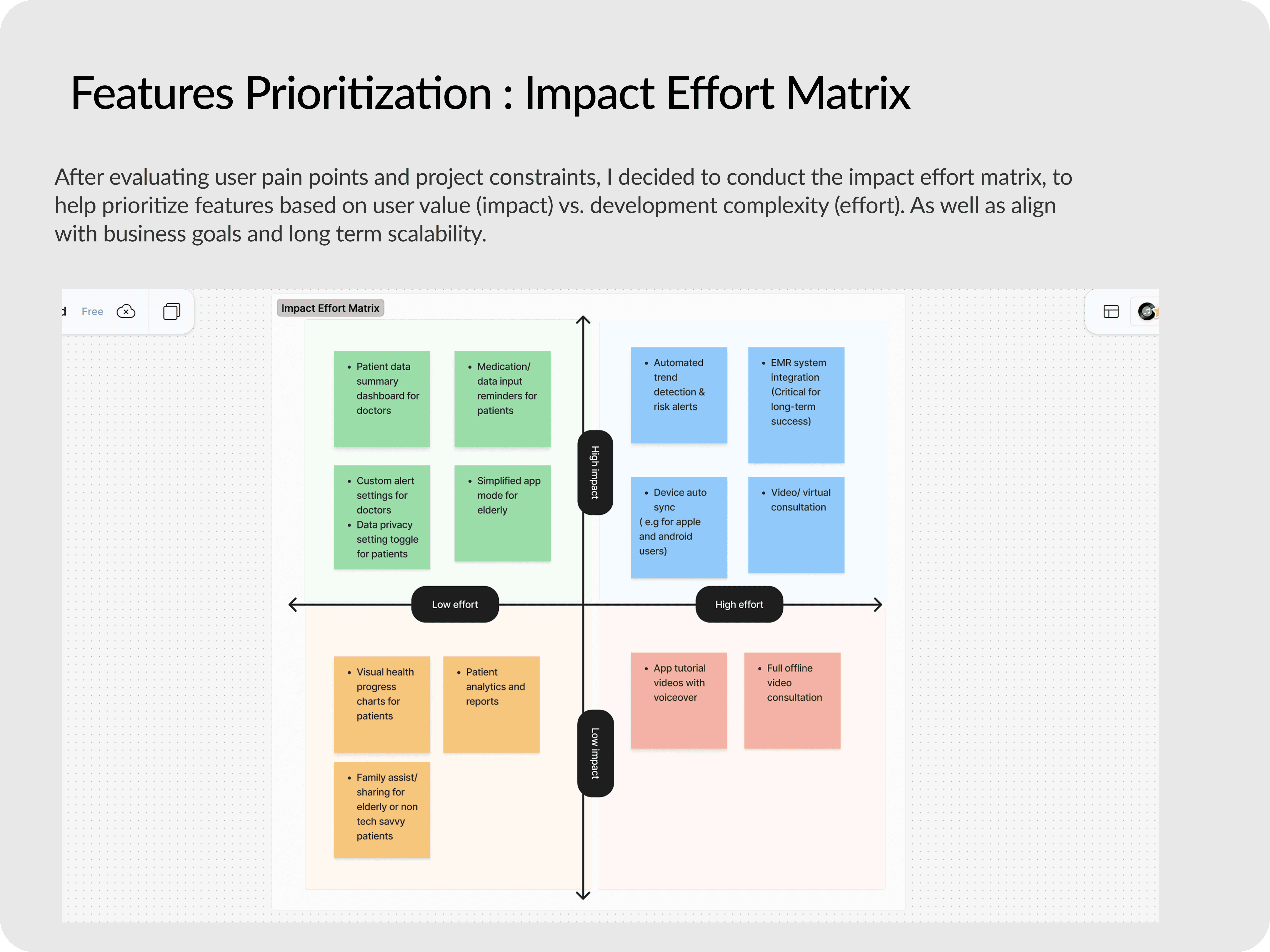
This project taught me how to balance the complexity of HealthTech with functional and intuitive design. I became a stronger communicator and UX advocate working across both patient and provider mindsets. I was able to narrow down the most important features for the first version by learning about the users and their goals they want to achieve on using the product.
This project taught me how to balance the complexity of HealthTech with functional and intuitive design. I became a stronger communicator and UX advocate working across both patient and provider mindsets. I was able to narrow down the most important features for the first version by learning about the users and their goals they want to achieve on using the product.